



Picture this: you wake up on a bright, sunny morning, take a glance in the mirror, and instead of critiquing every imperfection staring back at you, you smile—genuinely. Sound like a pipe dream? Well, for Maya, 28, this was no easy feat. After a tumultuous divorce, her sense of self-worth was in tatters, eroded by the stresses of life, leaving her grappling with the alien concepts of forgiveness, compassion, and acceptance. And let’s face it, she’s not alone. Echoes of her journey resonate with many of us, particularly women striving to thrive amid the chaos of modern life. In a society where perfection is often glorified, embracing one’s uniqueness might just be the most revolutionary step toward mental wellness you can take today.
Self-love—it’s a buzzword we hear everywhere, from Instagram captions to Saturday wellness retreats. But let’s get serious. More than just a trending phrase, it’s a linchpin for solid mental health. According to research in the Journal of Social and Clinical Psychology, self-compassion directly links to mental resilience. That’s right, folks. Self-love matters. It can bolster resilience, cut down stress, and brighten your outlook on life. NYU’s Dr. Sarah Chen put it succinctly when she said,
“When we practice self-love, we essentially create the psychological stability we need to thrive.”
— Dr. Sarah Chen, NYU
Let’s dive deeper, shall we? In this article, we’re exploring the science behind self-love, sharing real stories, identifying potential roadblocks, and revealing practical steps toward nurturing self-love as a foundation for mental wellness. It’s a journey, not a sprint, and it’s grounded in solid psychological research.
Table of Contents
- Understanding the Science of Self-Love
- Identifying Barriers to Self-Love
- Practical Steps Towards Self-Love
- Real-World Application: Case Examples
- Embrace Self-Acceptance and Growth
- Moving Forward with Self-Love
Key Takeaways
- Self-love is essential for mental wellness and resilience.
- Identifying and overcoming barriers to self-love can aid personal growth.
- Regular self-care practices are vital for nurturing self-love.
- Setting healthy boundaries promotes emotional well-being.
Understanding the Science of Self-Love
Let’s break down this buzzword: self-love. It means making a choice—every single day—to treat yourself with kindness, to keep a positive self-image, and to engage in activities that boost your growth and happiness. Sadly, this mindset doesn’t exactly come naturally for many of us. Thanks to societal pressures—unrealistic beauty standards, academic expectations, work demands—self-doubt becomes almost inevitable, especially when you’re still figuring out who you are.
That struggle is real, but so are the benefits. A study from the University of Texas found that self-love not only boosts mental health but also makes us better at handling stress and managing our emotions. Oxytocin, known as the “love hormone,” increases when you practice self-kindness, helping to lower those pesky anxiety levels. This isn’t just about feeling good; there’s science backing up these warm, fuzzy feelings.
Think of self-love like a suit of armor against life’s sucker punches. With a healthy dose of self-worth, you’re better equipped to handle life’s lows without spiraling into a pit of self-criticism. Dr. Sarah Chen nailed it when she compared it to personal armor, saying,
“It’s about setting healthy boundaries and learning to say no in a world that often demands too much.”
— Dr. Sarah Chen, NYU
Identifying Barriers to Self-Love
So, what’s holding us back from embracing self-love? Before jumping into the how-to part, let’s pinpoint a few roadblocks. Ever caught yourself doom-scrolling through social media, only to feel like a shadow of your real self? You’re not alone. A 2022 Pew Research Center survey highlighted that 31% of young women felt worse about their bodies after scrolling through social media. When you’re constantly comparing yourself to others’ highlight reels, it’s hard not to feel inadequate.
Enter Maya’s journey to self-love. Her late-night social media binges were like jumping into a sea of perfect lives—only to emerge feeling like a shipwreck. It wasn’t until she re-evaluated her online interactions that a shift occurred.
“I learned to curate my feed—choosing voices that uplift, not those that drag me down.”
— Maya
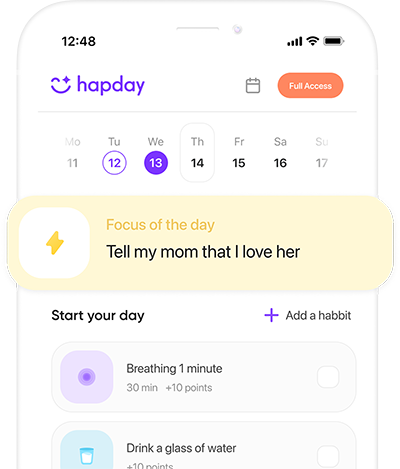
And when you’re in those moments of self-doubt or feeling overwhelmed by social pressure, there’s tech to turn to. Enter AI life coaches like Hapday, which offer real-time support and mood tracking to help guide you back to self-kindness when the world feels too heavy.
Practical Steps Towards Self-Love
So how do we nurture this elusive self-love? Here, it’s all about the practice—small, consistent actions that stack up over time.
Establish Compassionate Self-Talk
What’s the talk track in your head when things don’t go as planned? That internal chatter can be powerful. To foster self-love, ya gotta flip your inner narrative. Instead of “I can’t do this,” why not try, “I’ll give it my best shot”? Research from the Journal of Personality and Individual Differences suggests that self-compassion—not harsh self-criticism—actually boosts motivation and personal growth.
Affirmations can help anchor this mindset. “I am worthy,” or “I am enough,” said daily, can transform these abstract ideas into tangible truths.
Prioritize Mindful Self-Care
Listen, self-care isn’t just binge-watching Netflix with a face mask. It’s intentional. Whether it’s breaking a sweat, meditating, or simply indulging in a hobby, these actions loudly declare that you matter.
Mindfulness, in particular, helps tune into your body and emotions, fostering understanding and love. Mindful.org reveals that incorporating mindfulness into daily life reduces emotional reactivity and builds empathy toward yourself. Whether it’s rolling out a yoga mat or wandering through a lush, quiet park, self-care can be whatever feeds your soul.
Set and Respect Personal Boundaries
Building healthy boundaries isn’t about shutting people out; it’s about defining what you value. Sometimes that looks like declining invitations when you need downtime or expressing your emotional needs clearly.
“Boundaries protect your mental health, giving you space to express your true self without guilt.”
— Dr. Elizabeth Warren, Cognitive Therapist
Setting these limits opens the door to authentic interactions and true self-respect.
Real-World Application: Case Examples
Consider Sophie, battling perfectionism. Embracing her imperfections kick-started her self-love journey, proving that flaws aren’t faults but part of her wonderful, messy humanity. For her, positive self-talk became her cheerleader as she celebrated every small win, reminding her that being ‘enough’ isn’t about perfection.
Or think about Olivia, who used to put everyone else’s needs before her own, leaving her emotionally spent. By setting boundaries and shifting her focus inward, she recharged her emotional batteries. This self-reclamation not only benefited her mental health but ultimately improved her relationships too.
These examples show that self-love isn’t a quick fix. It’s patiently and persistently incorporating supportive habits into your life, where tools like Hapday can keep you accountable. With over 3 million users already reaping its benefits, it’s clear that structured guidance can help sustain self-love’s nurturing glow.
Embrace Self-Acceptance and Growth
Self-love thrives on a foundation of acceptance and growth. It involves recognizing your strengths and limitations while rejecting any mad dash for perfection. This isn’t stagnation; it’s actively loving who you are while embarking on a journey of personal evolution.
Personal growth doesn’t necessitate changing who you are—it’s about becoming more of who you authentically are. See challenges as lessons rather than measures of inadequacy, understanding they’re pieces in the larger puzzle of your life’s rich tapestry.
Ann’s story offers inspiration. Balancing career pressures and self-love, she learned to spot burnout early and placed self-care first. Her routine included journaling and mindfulness, allowing her to grow without sacrificing well-being.
When those tough moments hit, tools like Hapday can help reframe reactions thanks to their mood and habit tracking features. Identifying patterns can guide necessary adjustments, steering you back on course.
Moving Forward with Self-Love
The journey to self-love isn’t just a personal voyage; it’s a continual effort to align what you do with who you truly are. You might unearth some old patterns that need tossing, discovering what self-compassion means to you in the process. Whether partaking in a broader movement or quietly affirming your worth, cultivating self-love arms you with resilience and grace.
For Maya, the road wasn’t always smooth. But through patience, nurturing practices that revived her spirit, and support from others, she found that self-love, while challenging, is a deeply rewarding gift.
Initiating these strategies can feel daunting, but they’re made easier with the right support. Explore platforms like Hapday (hapday.app) for AI coaching that aids you in establishing enduring self-love practices. With over 3 million people embarking on this journey, Hapday offers the tools needed for sustained mental wellness.
The Bottom Line
Self-love is not simply a catchphrase; it’s a vital step towards mental wellness. By embracing our individuality, overcoming barriers, and actively nurturing self-acceptance, we can build a stronger foundation for our emotional health. Remember, the journey involves patience and ongoing commitment, but it’s incredibly rewarding.
References
- University of Texas Study: The Correlation of Self-Compassion and Mental Resilience
- Pew Research Center: The Impact of Social Media on Self-Perception
- Mindful.org: The Benefits of Mindfulness Practice
- Journal of Personality and Individual Differences: Self-Compassion Enhances Motivation and Personal Growth