



Table of Contents
- Understanding Mindfulness and Its Role in Stress Reduction
- Beginning Your Mindfulness Journey: Techniques to Try
- Mindfulness and Its Psychological Impact
- Combining Mindfulness with Traditional Approaches
- Embracing a Mindful Lifestyle
- Crafting Your Mindful Life
On a bright morning, a lot like any other day, Alicia found herself seated at her desk, feeling the crushing weight of her responsibilities. Deadlines hovered like menacing storm clouds, and her thoughts were swirling—a storm of their own. Even her usual savior, that morning cup of coffee, seemed to abandon her, tasting more bland than she remembered. With a sigh, she glanced at her phone—a fresh heap of emails awaited. This wasn’t what she dreamt of when embarking on her career. Alicia, like so many, found herself ensnared in a relentless cycle of stress, seeking solace in simple mindfulness techniques.
Have you been in Alicia’s shoes? You’re definitely not swimming upstream alone. According to American Psychological Association data from 2020, a staggering 79 percent of adults have wrestled with stress related to the pandemic, work, and the daily grind (APA report). But here’s the twist—relief might be closer than you think: mindfulness, an ancient practice paired with the stamp of modern science’s approval.
Understanding Mindfulness and Its Role in Stress Reduction
More than a fleeting buzzword, mindfulness is a rich tapestry of practices designed to heighten awareness of the present moment.
“Mindfulness is paying attention in a particular way: on purpose, in the present moment, and nonjudgmentally.”
— Dr. Jon Kabat-Zinn, Pioneer of Mindfulness-Based Stress Reduction
This subtle shift—perceiving our thoughts and emotions differently—holds the key to reducing stress, as highlighted by a 2014 meta-analysis pointing to its effectiveness (JAMA Internal Medicine).
It’s not about silencing your mind but about recognizing thoughts as they drift by, without casting judgment. Picture this: you’re disentangling from stress-inducing patterns, finding instead a reservoir of calm and clarity.
Beginning Your Mindfulness Journey: Techniques to Try
The Art of Mindful Breathing
Mindful breathing often serves as the gateway to mindfulness—both accessible and effective.
“Mindful breathing is simple yet profoundly transformative. It pulls folks back to the here and now, loosening anxiety’s grip.”
— Dr. Sarah Chen, NYU
Ready to give it a shot? Seek a serene spot, sit or lie down. Let your eyes gently close. Now, focus on each breath. Feel the air as it enters your nostrils, fills your lungs, then softly exits. Thoughts will creep in—let them—but bring your focus back to breathing. Five minutes might suffice to lay the foundation for deeper mindfulness work.
Why is breath work such a heavy hitter? Stress kicks in our sympathetic nervous system—the fight-or-flight response. Mindful breathing shakes hands with the parasympathetic nervous system, encouraging relaxation and trimming those stress hormones like cortisol.
Body Scan Meditation
Maya, at 28, found herself caught in chronic tension post-divorce, her body screaming for relief. Enter body scan meditation, a tool within mindfulness practices, helping her ease into connection and comfort amidst bodily stress. This technique invites you to center your attention on various body parts, releasing tension and fostering physical awareness.
Lie down comfortably and take a deep breath. Eyes closed, start at the crown of your head, gradually working down to your toes. Notice tension or discomfort, and by observing—rather than reacting—allow relaxation to naturally unfold over time.
Mindful Walking
Sometimes, walking becomes unwitting meditation. Slow your pace, tune into the rhythm of your steps. Focus on the ground beneath your feet and the sway of your arms. This method turns a walk into an immersive mindfulness adventure, slicing stress by rooting focus firmly in the present.
Practicing mindful walking doesn’t demand extra minutes—recast your regular strolls as mindfulness sessions. Maybe during a lunch break or while out with your dog. A touch of calm, then grounding—who wouldn’t want that?
Mindfulness and Its Psychological Impact
For years, researchers have dismantled the benefits of mindfulness—and they’re significant. A 2011 study concluded that regular mindfulness practice yields lower stress levels and boosts emotional regulation (Social Cognitive and Affective Neuroscience study).
“Mindfulness reshapes our brains. It amplifies grey matter density in sections tied to emotional regulation and self-referential processes.”
— Dr. James Parker, Harvard
These changes bolster our capacity to cope with stress, nurturing resilience and balanced reactions to life’s curveballs.
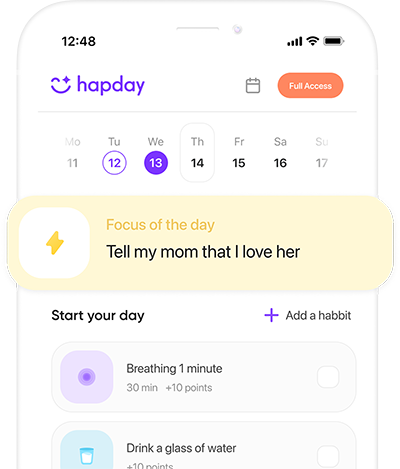
Platforms like Hapday enhance this journey. As part of a 3 million-strong user base, track your mindfulness journey and its ripple effects across stress levels.
Combining Mindfulness with Traditional Approaches
Mindfulness doesn’t stand alone. It seamlessly complements other stress-reduction strategies. Therapy offers insights, meditation apps provide guidance, and journaling invites reflection. Among these tools, you’ll find Hapday—a nifty combo of AI and psychology, keeping stress management within reach and ever-evolving.
Picture a calamity-filled day at work, chaos of emails and tasks piling up. Before mindfulness, it may have felt like an impending doom, but now—a pause, a breath, and centering—is possible. This shift—a conscious step back into the present—serves as a reminder of both capability and resilience.
Embracing a Mindful Lifestyle
Mindfulness—a lifestyle change, more than brief meditation echoes. It’s a constant cultivation of awareness permeating through every life facet—from eating to active listening, working to learning.
For those just dipping their toes into this realm, tools like Hapday grant structure and flexibility, weaving mindfulness seamlessly into contemporary life—a collective exploration within an ever-growing innovative mental health solution space.
Crafting Your Mindful Life
You’re now perched at the juncture of mindfulness, familiar with its techniques, understanding its psychological moorings, and discovering how snugly it fits into daily life. It’s your journey—paced only by you—with transformation possible at any corner turned.
Start light, sprinkle in a brief routine, and let it spread through your life. As you attune to this rhythm, stress seems less daunting, obstacles more conquerable, and joy—ever so effervescent.
Eager to deepen your mindfulness path? Tailored support can carve the way. Hapday (hapday.app) extends a welcoming hand with personalized AI coaching, helping 3 million users make mindfulness a daily ritual—an invaluable ally when managing stress, nurturing inner peace.
Key Takeaways
- Mindfulness enhances present-moment awareness, reducing stress and anxiety.
- Techniques like mindful breathing, body scan meditation, and mindful walking can be easily integrated into daily routines.
- Regular mindfulness practice reshapes brain structures associated with emotional regulation.
- It complements other stress-reduction strategies, making it a versatile tool in managing stress.
- Apps like Hapday can provide personalized support to enhance your mindfulness journey.
The Bottom Line
Embracing mindfulness can transform how we respond to stress and enhance our emotional well-being. Whether through breathing techniques, meditation, or walking, the journey to inner peace begins with small, intentional steps.
References:
- American Psychological Association: Stress in America
- JAMA Internal Medicine: Mindfulness-Based Stress Reduction and Health Benefits
- Social Cognitive and Affective Neuroscience: Impact of Mindfulness Practices