



Let’s imagine you’ve barely entered the office on a Monday morning, and there it is—the overwhelming stress of looming deadlines. Your hand reaches instinctively for that quick, convenient snack. It might momentarily satisfy, but is it really doing any good for your mood or mental clarity? We’ve all been there, scrounging for a quick fix, oblivious to how such choices ripple through our mental well-being.
Take Maya’s story. At age 28, she found herself on an emotional rollercoaster, grappling with the upheaval of divorce. Like so many, she’s learned that maintaining focus and energy isn’t just about willpower—it’s intimately tied to the food on your plate. So you can’t help but wonder: could that constant mental haze be linked to your dietary habits? Let’s delve into the potent interplay between what you eat and how you feel and unravel how you can harness this to buoy your mental health.
Table of Contents
- The Dance Between Nutrition and Mental Well-being
- The Essential Nutrients for Robust Mental Health
- Building a Brain-healthier Plate
- Mid-Journey Check-In: The Hapday Example
- Navigating Dietary Challenges
- Personal Insights: Maya’s Story
- Fostering New Habits
- Embracing Expert Advice
- Wrapping Up: The Nourished Mind Path
- References
Key Takeaways
- The food we consume greatly affects our mental health and emotional resilience.
- Key nutrients like omega-3 fatty acids and B-vitamins play a vital role in supporting brain health.
- Mindful eating and smart snacking can significantly improve mood and mental clarity.
- Dietary changes can provide powerful emotional support during difficult times.
- Utilizing technology, such as apps, can aid in maintaining good dietary habits.
The Dance Between Nutrition and Mental Well-being
The connection between diet and mood isn’t just wellness buzz; it’s a burgeoning field of study. Our brain—despite its lightweight form—demands a hefty chunk of the body’s energy, about 20% of it. So, what we feed ourselves isn’t trivial; it’s integral. Back in 2019, a significant study recorded in “Psychiatry Research” highlighted that diets drenched in processed foods have a clear link to higher depression rates.
“What we consume doesn’t just fuel us; it molds our emotional resilience.”
— Dr. Sarah Chen, NYU
Real life surprisingly echoes this science. Nutrients like omega-3s, found abundantly in fish, can stave off depressive episodes, a notion supported by NIH-backed research. Whole foods, colorful and rich with vitality, fortify our minds, while a junk-filled menu does the opposite. Should we be recalibrating our diets towards more mindfulness and nourishment? Absolutely.
The Essential Nutrients for Robust Mental Health
- Omega-3 Fatty Acids
Think salmon and mackerel—staples bursting with omega-3s, vital for brain cell integrity and mellowing inflammation tied to mood imbalances. “Frontiers in Psychology” even suggests omega-3 supplements could be a boon for those wrestling with depression. - B-Vitamins
Especially folate, B6, and B12—they’re fuel for the brain, crafting neurotransmitters that fend off anxiety and depression. Without them, our brain’s mood orchestra may falter. - Antioxidants
Pile on the berries and greens. Antioxidants battle oxidative stress, a foe to mental sharpness and mood. - Magnesium
This often-ignored mineral influences countless body reactions. Studies draw a line from low magnesium intake to heightened anxiety.
Building a Brain-healthier Plate
If science has you convinced, where do you start adjusting your dietary blueprint to bolster your mental state?
Crafting Your Meals
Envision meals that energize rather than sap. Breakfast might be oatmeal garnished with almonds, mingling fiber, antioxidants, and good fats. Lunch? A salad with greens and salmon—an omega-3 feast. Dinners could involve quinoa with veggies and a lean protein source, sustaining body and mind.
Smart Snacking
Opt for snacks like nuts or yogurt that maintain blood sugar equilibrium, precluding mood swings.
Practicing Conscious Eating
Eating extends beyond taste—it’s the art of presence. Pay attention when you eat, really savor each mouthful. “Health Psychology” touts mindfulness at the table as a step towards better food choices and less emotional eating.
Mid-Journey Check-In: The Hapday Example
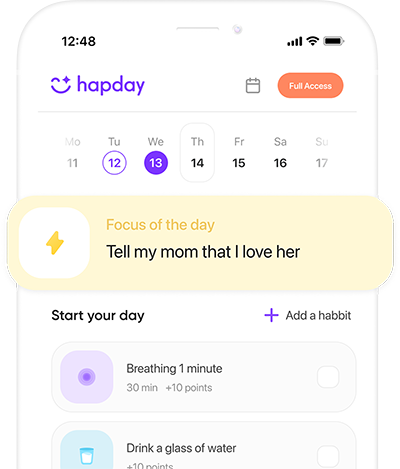
In revamping one’s diet, consistency is key. That’s where platforms like Hapday, with its 3 million users, lend a hand. Picture your phone as a personal coach, offering dietary guidance anytime without the hefty consulting fees. Doesn’t it sound revolutionary?
Navigating Dietary Challenges
Adapting diets isn’t invariably straightforward; modern life’s pace poses continuous temptations.
Taming Emotional Eating
Stress invites calorie-dense comfort foods, feeding a vicious cycle. Spotting triggers is step one—name them. According to Dr. Chen,
“Journaling about meals and moods unveils patterns and sparks change.”
— Dr. Sarah Chen, NYU
The Social Food Dilemma
Dining out? Menus can veer far from nutritional goals. Exercise your voice—choose spots with diverse offerings or suggest healthier options.
Eating Well on a Budget
Healthy eating isn’t inherently pricier. Planning, buying in bulk, and opting for seasonal goods keep costs manageable, letting you sustain nutritious choices.
Personal Insights: Maya’s Story
When Maya, a designer by trade, faced the tumult following her divorce, it drained her. Initially doubtful, she embraced a recommended path toward a dietary overhaul. Her transformation was marked—greater emotional stability and clarity came calling through conscientious culinary focus.
Reflecting, Maya realized,
“Changing my diet redefined self-care for me. Each meal morphed into an act of kindness toward myself—a bridge to holistic wellness.”
— Maya, Designer
Fostering New Habits
- Gentle Beginnings
Start with tiny swaps—fruit for chips here, nuts for cookies there. - Meal Planning
A planned week guards against decision fatigue, sustaining your goals. - Culinary Creativity
Home cooking nurtures and assures you’re conscious of what you consume. Theme nights like “Mexican Mondays” add spice to life. - Leveraging Technology
Apps today track more than calories; they map mood changes paired with meals, offering insights into dietary effects.
Embracing Expert Advice
Some situations crave an expert’s perspective. Dietitians offer personal diet maps tailored to lifestyle and needs, and though costly, guidance here can be priceless for struggling mental health.
The Bottom Line
This dietary journey may not erase mental health woes, but it’s a significant step forward. Acknowledge meals as more than fuel—they are intricate tools for mental nourishment.
For uninterrupted support—digital hands hold the key. Hapday’s AI life coaching and habit tracking suggest pathways to forging dietary habits that dovetail with mental wellness aspirations. Try uncovering the difference it’s making in these 3 million lives at hapday.app.
References
- National Institutes of Health (NIH). Omega-3 Fatty Acids. Exploring their Role in Mood.
- Psychiatry Research. Unveiling the Food-Mental Health Nexus.
- Frontiers in Psychology. The Relevance of Omega-3s in Mental Disorders.
- Health Psychology. Mindful Eating’s Impact on Well-being Adjustments.