



Table of Contents
- Understanding Guilt: Why Do We Feel It?
- The Psychology Behind Guilt
- Recognizing When Guilt Becomes Harmful
- Strategies to Break Free from Guilt
- Practical Steps to Implement These Strategies
- When Professional Help Becomes Necessary
- Empowering Your Path Forward
Key Takeaways
- Guilt is a complex emotion that can be both constructive and destructive.
- Self-compassion and acceptance are crucial in overcoming guilt.
- Identifying triggers and practicing mindfulness can help manage guilt effectively.
- Professional help may be necessary for persistent feelings of guilt related to trauma.
It was just another Thursday morning when Maya found herself in familiar territory — the relentless clutches of guilt. A simple oversight at work had stirred up a storm within her. An email remained unsent. As she perched at her kitchen counter, fingers curled around her coffee mug, that all-too-familiar tightness settled in her chest. For Maya, like so many others, guilt was like an invisible chain — locking away her peace of mind and self-worth. But does it always have to be this way? Could there be a way to unshackle from this emotional ball and chain?
Guilt — it’s all too universal and yet so deeply personal. It crops up from about a million scenarios — missed chances, so-called failures, or even things way beyond our control. Maybe you’ve caught yourself brooding over a forgotten birthday, a careless remark, or responsibilities left untended. If you’re nodding along, believe me, you’re not the only one. Understanding guilt and, more important, finding ways to break free from its lingering grip is both a challenge and a potential liberation.
Understanding Guilt: Why Do We Feel It?
Guilt, at its core, is a complex emotional experience that hits us when we feel we’ve stumbled over our personal codes or social norms. It can make us more reflective, even nudge us toward aligning with our moral compasses.
“Guilt can serve an evolutionary function. It pushes us to behave in socially cohesive ways, helping communities stick together.”
— Dr. Lisa Feldman Barrett, Neuroscience and Psychology Expert
Yet, not every shade of guilt is positive. There’s the kind that motivates us to learn and grow — and then there’s the toxic version that festers, turning into self-blame and gnawing away at self-worth. It’s this corrosive kind of guilt that often needs active intervention to conquer.
The Psychology Behind Guilt
To truly understand how to shake off guilt, we’ve got to dive into its psychological layers.
“Guilt is wrapped up in identity and self-awareness. It’s intricately linked to shame, though they’re different beasts. Guilt zooms in on an action, while shame attacks who we think we are at our core.”
— Dr. Sarah Chen, Clinical Psychologist at NYU
Studies have found that guilt fires up areas in our brains tied to anticipating punishment and self-reflection — the prefrontal cortex and anterior cingulate cortex, for the science-minded among us. This brain activity makes guilt feel intrusive and pretty tough to ignore, doesn’t it?
Recognizing When Guilt Becomes Harmful
Spotting when guilt transitions from constructive to destructive is crucial. Persistent guilt can fuel anxiety or even depression — research highlighted in the Clinical Psychology Review suggests this is especially true when trauma or sky-high personal standards are part of the picture. Imagine you’re like Maya, lying awake with fears and regrets swirling around. It’s in those quiet midnight moments that guilt can feel utterly paralyzing. Acknowledging these patterns is the first move toward freedom.
Strategies to Break Free from Guilt
Acceptance and Self-Compassion
One of the toughest yet most transformative steps is in embracing self-compassion.
“Everyone falters.”
— Dr. Kristin Neff, Self-Compassion Pioneer
Realizing you’re part of the big human story can lift the self-imposed isolation that guilt so often intensifies.
Identifying and Understanding Triggers
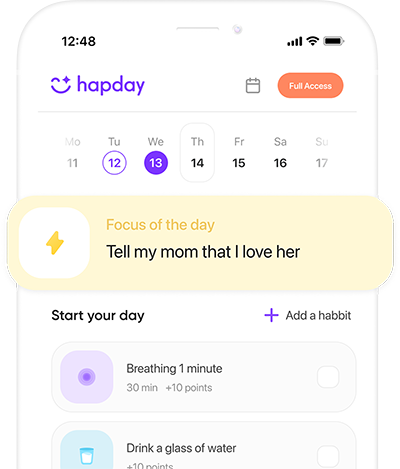
Pinpointing what triggers your guilt is key to breaking its hold. Is it a particular person, a setting, or an event from your past? Take up journaling — it’s a powerful ally here. Writing down thoughts can highlight patterns and the underlying roots of your guilt. Platforms like Hapday, among others, offer tools like mood tracking and live coaching to navigate these murky waters.
Cognitive Restructuring
Challenge those thoughts that keep guilt alive. Cognitive-behavioral techniques focus on flipping negative beliefs on their head.
“Instead of thinking, ‘I’m a failure because I slipped up,’ shift to ‘I’m growing from my experiences.’
— Dr. Sarah Chen, Clinical Psychologist at NYU
This mental pivot can reduce guilt and build resilience.
Embracing Forgiveness
Forgiveness — especially of oneself — plays a pivotal role. A wealth of studies featured in the Journal of Counseling Psychology underscores forgiveness’s healing powers. Genuine forgiveness isn’t about wiping the slate clean but about letting go of resentment for the sake of your mental well-being.
Practical Mindfulness Techniques
Mindfulness, staying anchored in the present, is a remedy for guilt-riddled ruminations. Simple methods like focused breathing or meditation help steer the mind from negative spirals. Imagine lying there in the dead of night, mind racing — apps like Calm or Headspace offer guided sessions to help anchor you when it’s needed the most.
Call back to Maya’s scenario, the dawn creeping in, and your mind in need of calm. Hapday, with its round-the-clock AI coaching, offers a lifeline, providing support exactly when guilt feels heaviest.
Practical Steps to Implement These Strategies
Rolling out these strategies takes patience and persistence. Here’s how you can start:
- Daily Self-Check-Ins: Give yourself a few minutes every day for reflection. Ask, “What sparked guilt feelings today?” Identifying these cues can stop them from snowballing.
- Engage in Talk Therapy: Chatting with professionals can provide new perspectives. Traditional therapy has its merits, but self-guided platforms like Hapday offer a more accessible start to personalized mental health care.
- Art as Outlet: Channel your emotions through creativity. Art in any form allows you to articulate complex feelings without words.
- Acts of Service: Turn guilt into proactive kindness. Volunteer or lend a helping hand — making a positive impact can reinvigorate your sense of purpose.
When Professional Help Becomes Necessary
While self-help steps are crucial, sometimes professional intervention becomes essential. Persistent guilt, especially when linked to trauma or ingrained patterns, might need the expertise of mental health pros. Therapeutic approaches like cognitive-behavioral therapy (CBT) or EMDR show effectiveness in addressing deep-seated guilt and emotional distress.
Empowering Your Path Forward
Breaking free from guilt today is more than feasible — it’s a journey beckoning introspection and action alike. It kicks off with acknowledgment and embraces compassion along the way. As you build understanding, question guilt’s tale, and extend forgiveness to yourself, empowerment slowly takes the place of remorse.
Does any of this resonate with you? Imagine having steady support while employing these strategies. Over 3 million people have sought Hapday’s assistance on this path, utilizing evidence-based tools for habit-building and emotional support. If you’re eager to turn guilt into growth, visit hapday.app today to explore a range of guided coaching tailored to your needs.
The Bottom Line
Breaking free from guilt involves understanding its impact, utilizing effective strategies, and seeking support. Recognizing the difference between constructive and destructive guilt is vital to reclaiming your sense of self-worth and peace. Take the steps to empower your journey towards emotional wellness.
References
- American Psychological Association
- Clinical Psychology Review
- Journal of Counseling Psychology