



Table of Contents
- What Exactly is a Daily Journal?
- Why You Need This in Your Life: The Perks of Daily Journaling
- Level Up Your Emotional Intelligence
- Wave Goodbye to Stress
- Master Problem-Solving Like a Pro
- Unleash Your Inner Picasso
- Build Your Discipline Muscle
- Memory Like an Elephant
- Kick-starting Your Daily Journal Habit
- A Sneak Peek at Journal Types
- Tackling Journaling Hurdles
- How to Wrap This Up
What Exactly is a Daily Journal?
Let’s break it down. A daily journal is your personal universe—a place where you’re the boss, jotting down whatever thoughts, feels, or random musings swirl through your mind. It’s a daily habit, but without those pesky rules or formats breathing down your neck. No structure, just vibes… honestly, that’s the beauty of it. The freedom to make it yours.
Why You Need This in Your Life: The Perks of Daily Journaling
Level Up Your Emotional Intelligence
So, turns out, jotting things down can actually make you smarter about your emotions. Crazy, right? By spilling your thoughts onto the page, you kind of have to pause and really think about what you’re feeling. Like that time you realized (or maybe you didn’t?) you were repeatedly getting annoyed on Wednesdays—who knew? A study in Emotion (2020, Baikie & Wilhelm) actually backs this up: regular scribbling boosts your emotional clarity. Sweet deal.
Wave Goodbye to Stress
Here’s the thing: bottling up stress is like shaking a soda can—sooner or later, it’s going to explode. Journaling lets you twist open the cap slowly. The Journal of Clinical Psychology says so—those folks who journal are less stressed and anxious (Murnahan, 2021). Who would’ve thought a pen and paper could be such a relief, huh?
Master Problem-Solving Like a Pro
Ever noticed how problems seem smaller when they’re on paper? Daily journaling makes you break it down, bit by bit—a method that Cambridge University Press (Klein, 2019) says sharpens your cognitive powers. It’s like turning a monstrous issue into bite-sized pieces. Makes it way more digestible, don’t you think?
Unleash Your Inner Picasso
Okay, so maybe you’re not painting on canvas, but a journal is where your creativity can run wild. No judgments, just write whatever pops up. A study in the Creativity Research Journal (Richards, 2022) found our little habit here nudges creativity. And who doesn’t need a creative kick now and then?
Build Your Discipline Muscle
Here’s the kicker—when you make journaling a daily thing, you’re building discipline. Sure, it’s not lifting weights, but isn’t training your mind just as important? It sets the tone for sticking to other goals, too. We could all use a bit more consistency in life, right?
Memory Like an Elephant
Remember that thing about writing by hand? It sticks with you better—like when I wrote out my grocery list and—whoops! Forgot the milk again. But seriously, a study in Psychological Science (Mueller & Oppenheimer, 2014) found handwriting actually helps memory retention. Handy for journaling, I’d say.
Kick-starting Your Daily Journal Habit
- Pick Your Poison: Digital or good ol’ paper? Take your pick, whatever feels like you.
- Timing is Everything: Morning reflections or night-time musings? Claim your time slot and stick to it.
- Your Journal Sanctuary: Choose a comfy, quiet spot—a zone where judgment doesn’t exist.
- Start Tiny: Just a couple of sentences a day if you’re a newbie. No pressure to write a novel.
- Keep it Real: Mask off, folks—this is your space to be completely candid.
A Sneak Peek at Journal Types
- Gratitude Journal: Cling to those sparks of gratitude each day.
- Bullet Journal: Blends planning with a splash of mindfulness.. and maybe some doodles.
- Dream Journal: Jot down those weird dreams before reality hits.
- Mood Journal: Track emotions—find the stories behind the patterns.
Tackling Journaling Hurdles
Writer’s Block Much?
Stuck? It happens to all of us. A prompt like “What rocked/sucked today?” can be a great start.
Busy Schedule?
Life’s a whirlwind, but five minutes? You can find that in your day. Quality over quantity, always.
Privacy Paranoia?
No problems. Secure that diary—use locked apps or tuck it safely away.
How to Wrap This Up
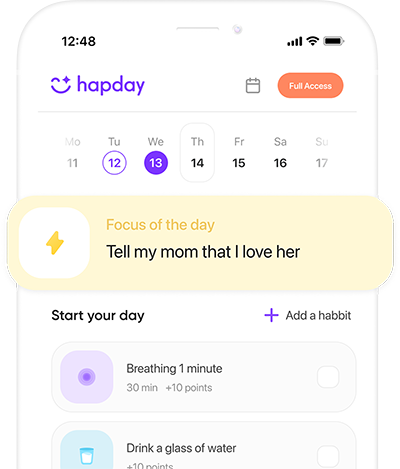
Using a daily journal can feel a bit like stumbling upon a secret life hack for mental clarity. It helps you tune into yourself, nudges stress to the sidelines, and even gives your creative spirit a nudge. Stick with it to see the magic happens—and when you’re ready for more personalized paths to mental clarity, check out this cool space called Hapday.
References
- Baikie, K. A., & Wilhelm, K. (2020). Emotional and physical health benefits of expressive writing. Emotion.
- Murnahan, J. (2021). Stress management through writing. Journal of Clinical Psychology.
- Klein, J. (2019). The cognitive benefits of journaling. Cambridge University Press.
- Richards, R. (2022). Creativity and journaling. Creativity Research Journal.
- Mueller, P. A., & Oppenheimer, D. M. (2014). The pen is mightier than the keyboard: Advantages of longhand over laptop note-taking. Psychological Science.