



Table of Contents
- Understanding Self-Esteem
- The Science Behind Self-Esteem and Mental Health
- Self-Esteem and Resilience
- The Role of Self-Compassion
- Impact on Relationships
- Promoting Healthy Self-Esteem
- Conclusion
- References
Understanding Self-Esteem
Self-esteem, it’s like a personal mirror of beliefs about oneself and emotional states—hello, triumphs and tribulations. Seriously, who hasn’t felt the sting of shame or the glow of pride? It kinda gets into everything: decision-making, relationships, emotional ups and downs… you name it. The American Psychological Association—yep, those folks—say that your self-worth plays a huge role in mental health, directly linked to how happy you feel. Back in 2014, Orth and Robins rummaged through over 200 studies and found that high self-esteem is a major happiness generator. Nice, right?
The Science Behind Self-Esteem and Mental Health
Listen to this: Tons of research scream how much self-esteem messes with mental health. There’s this hefty study in the Journal of Personality and Social Psychology. It says folks with high self-esteem tend to dodge anxiety and depression way more often. On the flip side, low self-esteem’s like a dark cloud hanging over those who might grapple with psychological hurdles (Sowislo & Orth, 2013). Negative vibes from low self-regard can fuel stress—an accelerator for mental mishaps. I guess that downward spiral is a thing after all…
Self-Esteem and Resilience
Wouldn’t you know it? Bouncing back from life’s curveballs—resilience, I tell ya—is tangibly tethered to how highly you esteem yourself. The University of California folks found that those with pumped-up self-esteem can tackle stress better, like ninjas of emotional recovery (Schiraldi & Brown, 2001). It creates a protective “bounce-back” armor, warding off stress and toxic emotions, cozying into the fortress of mental wellbeing. Honestly, it’s like having an emotional life jacket!
The Role of Self-Compassion
And oh! This curveball called self-compassion—a cousin of self-esteem—is equally crucial. It’s all about treating oneself kindly when things go south. Give yourself a break sometime, why don’t you? According to a study in the Clinical Psychology Review, folks developing self-compassion tend to shake off anxiety, depression, and stress more easily (MacBeth & Gumley, 2012). It’s the mental equivalent of a comforting hug.
Impact on Relationships
Self-esteem doesn’t just lurk in your head; it worms its way into your love life and friendships too. Those who have it in spades often find themselves swimming in relationships that are both healthy and fulfilling in character. Meanwhile, if you’re checking your phone constantly for reassurance from others, maybe it’s time to reassess. The Journal of Personality and Social Psychology highlights it — higher self-esteem leads to smoother social sailing (Murray et al., 2006).
Promoting Healthy Self-Esteem
Building up your self-esteem? It’s a marathon, not a sprint. It takes real curiosity and patience with oneself. Use positive self-talk, set realistic goals, and find uplifting company. Try to practice self-kindness and even get professional insight when stuck. These are nuggets of wisdom for a well-rounded journey to mental peace.
Conclusion
So there it is: Self-esteem is the matchmaker for a healthier mind. It’s no small fry, influencing resilience and relationships. By nurturing it, taking tiny steps towards self-discovery, Gen Z and Millennial women can seriously up their life quality. Imagine that—all from a little self-belief!
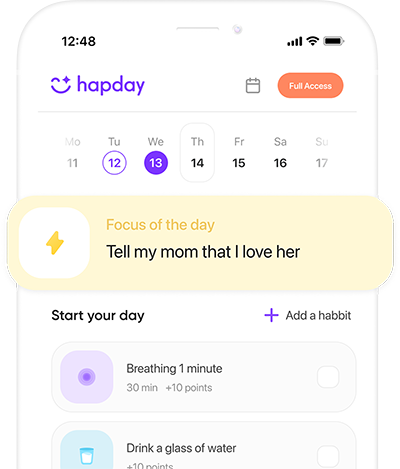
Do you feel ready to boost your mental wellness and self-esteem? Check out Hapday to start steering your life towards a clearer mental horizon.
References
- Orth, U., & Robins, R. W. (2014). The Development of Self-Esteem. Current Directions in Psychological Science, 23(5), 381-387.
- Sowislo, J. F., & Orth, U. (2013). Does Low Self-Esteem Predict Depression and Anxiety? A Meta-Analysis of Longitudinal Studies. Psychological Bulletin, 139(1), 213-240.
- Schiraldi, G. R., & Brown, S. L. (2001). The Resiliency Quiz: Who bounces back? American Psychological Association.
- MacBeth, A., & Gumley, A. (2012). Exploring compassion: A meta-analysis of the association between self-compassion and psychopathology. Clinical Psychology Review, 32(6), 545-552.
- Murray, S. L., Holmes, J. G., & Griffin, D. W. (2006). The Self-Fulfilling Nature of Positive Illusions in Romantic Relationships: Love is not blind, but prescient. Journal of Personality and Social Psychology, 90(1), 56-75.