



Table of Contents
- Introduction
- What is Meditation?
- Day 1: Understanding the Basics
- Day 2: Guided Meditation
- Day 3: Visualization Techniques
- Day 4: Mantra Meditation
- Day 5: Body Scan Meditation
- Day 6: Loving-Kindness Meditation
- Day 7: Integrating Meditation into Daily Life
- The Science-Backed Benefits of Meditation
- Conclusion
Introduction
Alright, folks, buckle up. In our hectic daily grind — which seems designed by chaos itself, doesn’t it? — peace can feel like a rare gem. Especially for Gen Z and Millennial women who are doing their best balancing acts between, well… everything. Now, meditation might just be your secret weapon. It’s like a ticket out of the madness and onto a path that science swears by for elevating mental wellbeing. What say we dive into a 7-day meditation challenge? It’s time to uncover just how transformative this old-school practice can be.
What is Meditation?
Okay, so what’s this meditation gig all about, you ask? Well, it’s basically you using techniques — like mindfulness or honing in on a particular thought — to snag some mental clarity and emotional chill. As it happens, recent findings have our backs, showing that meditation can kick stress to the curb, turbocharge concentration, and buff up your mental health (Goyal et al., 2014).
Day 1: Understanding the Basics
Primary Focus: Mindful Breathing
Your kick-off activity? Mindful breathing. Get comfy, close those eyes, and just breathe. Deep inhale through the nose, slooow exhale through the mouth. Sounds simple, right? But this focus on breath is a nifty trick to dial down stress and amp up mindfulness, just pulling you into the moment like that (Zeidan et al., 2010).
Secondary Focus: Setting Intentions
Before you start, think about why you’re doing this. Want less anxiety? More focus? Set a clear intention. That goal will make your whole meditation gig sparkle just a bit brighter.
Day 2: Guided Meditation
Primary Focus: Stress Reduction
Now let’s switch it up with a little guided meditation. Apps like Headspace and Calm are ready to hold your hand. Seriously, even just a week of this can chill out stress and anxiety — at least, that’s what some studies out there claim (Hoge et al., 2013).
Secondary Focus: Progressive Muscle Relaxation
Try out some progressive muscle relaxation. It’s like tense, release, repeat for every muscle group you’ve got. Who knew tension could just… vanish?
Day 3: Visualization Techniques
Primary Focus: Emotional Calmness
Visualization is like a mental getaway. Picture yourself on a beach or in a forest (no plane ticket required). This mental voyage boosts emotional balance and resilience — or so they say (Schwartz et al., 2010).
Secondary Focus: Gratitude Practice
Mix it up by visualizing the things you’re grateful for. Gratitude has this sneaky way of making life feel a bit brighter.
Day 4: Mantra Meditation
Primary Focus: Enhanced Concentration
Mantra meditation? It’s about picking a word or phrase to fend off annoying thoughts. Go with “peace” or “I am calm,” and let it anchor you. Enhancing concentration while you’re at it? Sounds like a win (Bormann et al., 2006).
Secondary Focus: Journaling Thoughts
Afterward, grab a notebook and jot down any thoughts or vibes from the session. It’s like preserving that zen moment on paper.
Day 5: Body Scan Meditation
Primary Focus: Body Awareness
Body scan meditation is basically an acknowledgment tour for your body, no judgments allowed. Just notice sensations, and grow your self-awareness and acceptance in the process (Creswell et al., 2007).
Secondary Focus: Self-Compassion
Be kind to yourself. If you hit any tension along the way, no self-criticism allowed. Seriously, go easy.
Day 6: Loving-Kindness Meditation
Primary Focus: Emotional Wellbeing
Loving-kindness meditation is like hugging the world with your mind. It fosters goodwill and warmth for yourself and then others. And yep, it pumps up those feel-good emotions while taking self-nagging down a notch (Fredrickson et al., 2008).
Secondary Focus: Expanding Kindness
Start with you. Work your way to family, friends, and eventually the universe. It’s about nurturing empathy.
Day 7: Integrating Meditation into Daily Life
Primary Focus: Habit Formation
Want to make meditation stick forever? Weave it into things you do daily. An everyday walk, a meal — turn those into mini mindfulness moments. Eventually, the benefits will just keep snowballing (Kabat-Zinn, 2003).
Secondary Focus: Reflecting on Progress
Check in with yourself. How’s the stress? The focus? Mental peace? Mark those changes.
The Science-Backed Benefits of Meditation
Meditation isn’t just escaping reality for a bit. Long term, it does wonders. A study spanned over 3,500 people across 47 different research settings found it helped with anxiety, depression, and even physical pain (Goyal et al., 2014). Another intriguing finding? It can actually reshape your brain to boost memory and emotional skills (Lazar et al., 2005).
Conclusion
Diving into this 7-day meditation challenge is a step — possibly a huge one — toward better mental health. As you journey through mindful breathing, visualization, and loving-kindness meditation, you’ll start to perceive less stress, more calm, and overall happiness tweaks that keep on giving. Keep going beyond these seven days, and you might just find meditation becomes your trusty sidekick for life’s ups and downs.
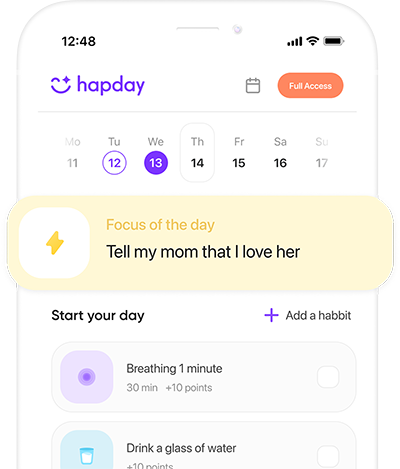
Looking for a little extra help on this mindfulness path? The Hapday App stands ready to support your mental wellness and personal growth voyage. Give it a whirl and see for yourself!