


Table of Contents
- Understanding Childhood Trauma
- How Trauma Affects Self-Perception
- The Role of Meditation in Healing
- What is Self-Love Meditation?
- Benefits of Self-Love Meditation for Trauma Survivors
- Incorporating Meditation into Daily Life
- Conclusion
- References
Boy, does childhood trauma have a way of sticking around like an unwanted guest. It’s like that shadow lurking in the corner—but there’s a bright side. Self-love meditation might just be the flashlight you need. A few minutes a day could dramatically change your mental and emotional scenery, ushering in a fresh wave of self-worth and acceptance. For a lot of Gen Z and Millennial women, this isn’t just some fluffy promise. It’s science-backed! (Thank you, modern research.) Anyway, self-love meditation’s showing its worth in helping folks shake off those lingering echoes of childhood trauma, opening the door to fuller and more joyful lives.
Understanding Childhood Trauma
Talk about carrying a heavy pack: childhood trauma refers to those rough patches of distress we encounter during our growing-up years. It might look like emotional, physical, or—unfortunately—sexual abuse. Imagine the trauma of witnessing domestic violence. Not a fun picture, right? According to some real-deal stats from the National Institute of Mental Health, between 15–43% of girls and 14–43% of boys go through at least one traumatic event in childhood. And wouldn’t you know it, these experiences can morph into anxiety, depression…even trouble forming healthy, loving relationships.
How Trauma Affects Self-Perception
Ah, trauma, the unwanted guest that alters our mirrors. What’s nuts is how it tinkers with your view of yourself, throwing wrenches into the machinery of self-love. Picture this: You’re stuck with a funhouse mirror image—negative self-image here, a dash of unworthiness there, maybe even some self-destructive spirals. In 2020, the Journal of Clinical Psychology published a study spelling out how individuals with gnarly childhood stories struggle with esteem and a dash of self-compassion. Who would’ve guessed?
The Role of Meditation in Healing
Now, let’s talk about meditation—our potential savior. It’s got a résumé stuffed with research-backed credentials: breathing, centering, all that jazz. A 2018 meta-analysis in the Journal of Trauma and Dissociation dug deep and found meditation itching to make significant dents in PTSD, anxiety, and depression symptoms. Starting to sound good yet? Tailoring meditation around self-love? That’s like rewriting the narrative scrawled inside your head, birthing new self-compassion and relationship potential.
What is Self-Love Meditation?
Self-love meditation, what a friend. It’s like sunshine—an opportunity to unearth love and compassion toward the most important person you might be neglecting: you! Through mindfulness, affirmations, and visualizations, your aim becomes a satisfying connection with your intrinsic worth. By focusing on self-compassion, this practice chips away at the garbage past trauma saddles you with.
Steps to Practice Self-Love Meditation
- Find a Comfortable Space: Begin by locating a quiet, comfortable spot—a haven where you can focus and truly zen out.
- Set an Intention: Plant intentions to bloom during meditation: “I’m worthy of love and compassion.” Drip-feed these thoughts into your psyche. They stick more than you think.
- Mindful Breathing: Close your eyes, and with each breath, anchor yourself. Let your mind wander back to the rhythm of your breathing. Stay present, even if just for a moment.
- Visualization: Envision a warm light wrapping you up like a protective quilt, driving away old feelings of shame. Watch it annihilate unworthiness with each glow.
- Positive Affirmations: Whisper inside your head sweet truths like “I love and accept myself,” letting those words erase any residual negativity in your mind.
- Reflect and Journal: Post-meditation, take a few moments to reflect. Maybe spill it all out on paper. Journaling solidifies insights gained, insights with depth unseen before.
Benefits of Self-Love Meditation for Trauma Survivors
Get this—gratitude list incoming, because self-love meditation’s packed with perks, especially when you’re snapping back from childhood trauma:
- Enhanced Self-Compassion: By showering yourself with love through meditation, negative self-talk is gradually outshone by forgiveness and kindness.
- Reduced Stress: Meditate, and cortisol—the pesky stress hormone—finds itself on the losing end. Cue relaxation and some delicious moments of peace.
- Improved Emotional Regulation: Self-love meditation lets you connect with your feelings, fostering healthier expressions—taking a page out of emotional intelligence’s book.
- Stronger Resilience: By nurturing self-love, you’re building a fortress of resilience. Armed and ready, navigating life’s minefields becomes just another Monday.
Incorporating Meditation into Daily Life
Consistency. The spell behind magic, really. To enjoy the wondrous bounty of self-love meditation, integrating it into daily life is something to consider:
- Morning Ritual: Kickstarting your day with a snippet of meditation lays a robust foundation for those upcoming challenges. Even 5-10 minutes pays off.
- Mindfulness Breaks: Use sporadic mindful intermissions with intention, tuning back into your breath amidst chaos or normalcy. Your sense of calm will thank you.
- Evening Wind Down: Calming yourself before bed? Swallowing one last rush of self-love meditation aids sweet dreams and cozy sleep.
Conclusion
If healing from childhood trauma is a mazy journey (and it is), then self-love meditation’s the light that never quits. By creating space for self-compassion and acceptance, you’re empowering yourself to conquer emotional landslides and psychological scars. Let self-love meditation be more than a mere practice, but a trusty ally steering you towards healing and self-discovery.
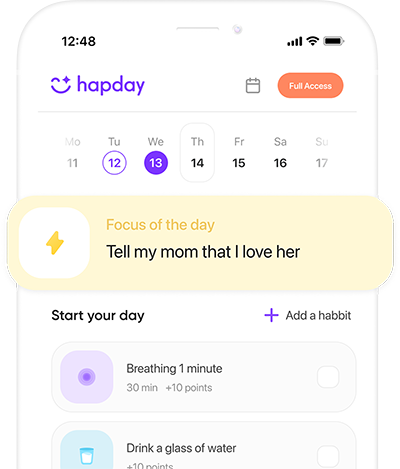
Launch yourself into healing with self-love meditation! Download the Hapday app here to discover guided meditations and a treasure trove of mental wellness resources.
References
- National Institute of Mental Health. (n.d.). “Childhood Trauma and Its Effects.”
- Journal of Clinical Psychology. (2020). “The Impact of Childhood Trauma on Self-Perception and Self-Compassion.”
- Journal of Trauma and Dissociation. (2018). “Meditation for Trauma: A Meta-Analytic Review.”
- Frontiers in Psychology. (2015). “The Benefits of Mindfulness Meditation for Trauma Survivors.”