



Table of Contents
- Understanding Meditation and Its Benefits
- Science-Backed Benefits of Meditation
- Types of Meditation for Mental Wellbeing
- How to Start a Meditation Practice
- Apps and Resources to Enhance Your Practice
- Integrating Meditation into Daily Life
- Conclusion
- References
Ok, let’s dive into the real talk here—life these days is like living in a blender on high speed, right? No wonder so many Gen Z and Millennial women (and men!) have started sneaking away to find some quiet moments with meditation. Seriously, this ancient practice has been the go-to for calming the mind and soul. I mean, who wouldn’t want a slice of peace in this chaotic world? It’s not just about escaping stress; it’s about fostering a healthier attitude and emotional balance. Meditation isn’t just fluff—scientific studies back it up. Let’s unravel how this practice can boost your mental wellbeing, with some legit techniques and practical advice for weaving it into our lives.
Understanding Meditation and Its Benefits
Meditation—what is it, really? It’s that practice where you try to focus your mind on something specific, like your breath or a particular thought, to reach a calm and clear state of mind. It sounds simple, but it’s surprisingly tough. According to a bunch of studies, meditation can significantly ease the symptoms of anxiety and depression. Take that meta-analysis in JAMA Internal Medicine as an example—they found mindfulness programs were pretty effective in improving anxiety and depression symptoms. There’s even evidence pointing to reduced PTSD symptoms and better overall psychological health for regular meditators. Now that’s something to take seriously.
Science-Backed Benefits of Meditation
- Stress Reduction: Stress is no match for meditation. Turns out, meditation can lower cortisol—the pesky stress hormone. In some study out of the University of Massachusetts Medical School, folks reported slashing their stress by 38% after giving mindfulness meditation a try. Not bad, huh?
- Increased Focus and Concentration: Need a brain boost? Meditation works wonders on your attention span and mental flexibility. Remember reading about that study in Psychological Science? In just two weeks, meditation training actually improved reading comprehension scores and boosted working memory. Like, that’s huge.
- Emotional Health Improvement: It’s not just about feeling good; it’s about seeing the world a little differently. Meditation can really elevate your emotional game. Johns Hopkins University dug into this and suggested that mindfulness meditation can fine-tune emotional regulation and dial down those emotional outbursts.
Types of Meditation for Mental Wellbeing
Okay, so there are numerous ways to meditate, each with its own perks. Here are a few you might find handy:
- Mindfulness Meditation: This one’s all about observing your thoughts without getting hooked. It’s the OG of meditation practices, building awareness in the moment.
- Transcendental Meditation: Ever tried sitting quietly and repeating a mantra? That’s transcendental for you—clear your mind and reach that blissful inner peace by focusing on a single phrase.
- Guided Visualization: Tap into your imagination! Drift away to a calming place in your mind to relax and find clarity.
- Loving-kindness Meditation: Also called Metta, this practice is about mentally sending happy vibes to others by repeating a few well-meaning phrases. It’s incredibly uplifting!
How to Start a Meditation Practice
Setting up a meditation routine isn’t some impossible task. Here’s how to ease in:
1. Find a Quiet, Comfortable Space
Settle into a cozy spot in your house—could be a quiet room or an undisturbed corner. Doesn’t have to be fancy.
2. Set a Time Limit
Starting small is key. Go for 5–10 minutes initially. You can extend it as you get more comfy with the process.
3. Focus on Your Breath
Breathe…inhale through your nose, hold it just a bit, and exhale through your mouth. Let your breath anchor you.
4. Acknowledge Your Thoughts
Brains wander—it’s just what they do. Instead of wrestling with your thoughts, acknowledge them and then steer your focus back to your breathing.
5. Practice Regularly
Stick to a consistent schedule. Many find morning or evening slots work best to slot in a little mindfulness daily.
Apps and Resources to Enhance Your Practice
In this digital age, why not let tech lend a hand in meditation? There are apps galore:
- Headspace: Packed with guided sessions and mini-videos, it’s like having a meditation mentor right in your pocket.
- Calm: From soothing sleep stories to guided meditation tracks, this one’s a fab companion for relaxation.
- Insight Timer: Offers thousands of free meditations. Seriously, if you can’t find it here, it probably doesn’t exist.
Integrating Meditation into Daily Life
The trick is not just to meditate but to let it blend into your everyday routine. How? Here are some ideas:
- Morning Routine: Kickstart your day with a quick meditation to set a positive tone.
- Work Breaks: Feeling stressed? Meditate for a few minutes during lunch or a coffee break and notice the difference.
- Evening Ritual: Use meditation as your wind-down tool before sleep each night.
Conclusion
Meditation isn’t just a practice; it’s a lifestyle change that can do wonders for your mental health. Whether you’re on a quest to unload stress, enhance focus, or balance emotions, meditation offers a journey to a healthier mind. And it’s not about waiting to achieve something—every moment counts. Trust me, with a little effort and patience; you’ll see shifts in how you navigate life’s ups and downs, making it well worth the try.
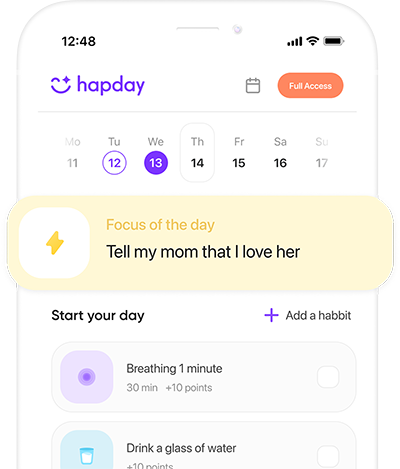
Ready to transform your mental wellbeing? Check out Hapday for personalized meditation guidance and take the first step towards a healthier mind today!
References
Oh, and if you’re the fact-checking type, see these:
- Goyal, M., et al. (2014). Meditation Programs for Psychological Stress and Well-being: A Systematic Review and Meta-analysis. JAMA Internal Medicine, 174(3), 357–368.
- Zeidan, F., et al. (2010). Mindfulness meditation improves cognition: Evidence of brief mental training. Consciousness and Cognition, 19(2), 597–605.
- Khoury, B., et al. (2013). Mindfulness-based therapy: A comprehensive meta-analysis. Clinical Psychology Review, 33(6), 763-771.