

Late on a quiet Tuesday night, maybe it’s two in the morning, you might find yourself deep in thought. Ever wondered why certain patterns repeat themselves, like a song stuck on loop? Is it the fear of opening up to others or shutting them out altogether? These questions linger and maybe you’re not alone. For many, the echoes of childhood trauma persist, quietly weaving themselves into our adult lives. Recognizing this is the first flicker of light toward healing.
Table of Contents
- The Hidden Impact of Childhood Trauma
- Understanding Why We Often Stay Stuck
- Tools and Techniques for Healing
- Reconnecting with Yourself: Inner-Child Work
- Breaking Free: The Next Steps
- Empowering Future Growth
- References
The Hidden Impact of Childhood Trauma
Childhood trauma—it’s more prevalent than you might guess. The Substance Abuse and Mental Health Services Administration reports over two-thirds of kids have lived through at least one traumatic event by 16. Emotional neglect, physical abuse, the painful loss of a loved one, or turbulent family dynamics—we’re talking about deep scars.
Take Maya, just 28 and forever pondering why anxiety hangs over her relationships like a storm. Finding help, she began piecing together the puzzle of her past—a childhood home filled with shouting and emotional upheaval.
“It’s like healing a limb that’s been broken forever.”
— Maya, Trauma Survivor
Her journey highlights something profound: acknowledging the impact of childhood trauma is the key to unlocking its hold.
Dr. Sarah Chen, a clinical psychologist at NYU, sheds light on this complex web:
“Our early years shape the neural pathways that color our emotions and reactions.”
— Dr. Sarah Chen, Clinical Psychologist
So, breaking free is an active effort. It involves identifying these deep-seated patterns and guiding them toward healthier paths.
Understanding Why We Often Stay Stuck
Confronting childhood trauma can feel like scaling a mountain—you might not even notice it until adulthood. The brain cleverly adapts to shield itself during crises, leaving behind coping strategies that run deep as roots. A study in the journal Neurobiology of Stress notes that trauma restructures the brain, especially areas tied to memory and emotion.
Why haven’t things changed? Perhaps you wonder. Professor Dan Siegel, a guru in neurobiology, explains:
“The brain’s built to protect. Trauma rewires us to seek safety even when the threat has passed.”
— Professor Dan Siegel, Neurobiologist
Understanding this helps shift the narrative. It’s not about blame; it’s about understanding the biological response trauma hardwires into us.
Imagine rewiring an old circuit board that’s been misfiring for years. Therapies like cognitive behavioral therapy (CBT), mindfulness, journaling, and even apps like Hapday—which offers 24/7 AI advice—provide ways to chart a new course.
Tools and Techniques for Healing
Healing requires strategies that build awareness and allow for emotional expression. Dr. Chen recommends crafting a “coherent narrative” of your trauma, aiming to connect past influences without spiraling into judgment or distress.
1. Therapy and Counseling
In therapy, a safe harbor awaits exploration and processing. Trauma-informed therapists or those trained in methods like Eye Movement Desensitization and Reprocessing (EMDR) work to ease and reinterpret traumatic memories.
“Therapy gave me the words to talk about my trauma.”
— Maya, Trauma Survivor
2. Mindfulness and Meditation
Mindfulness helps soothe PTSD and anxiety symptoms, promoting presence over being yanked back by the past. Research in the Journal of Traumatic Stress shows practitioners experience less psychological distress and better emotional regulation.
3. Journaling
Writing provides a space to untangle the chaos in our minds. It offers insight, sometimes seen as a version of narrative therapy, offering clarity and perspective. It allows us to change how we relate to trauma.
4. Technology as a Therapeutic Tool
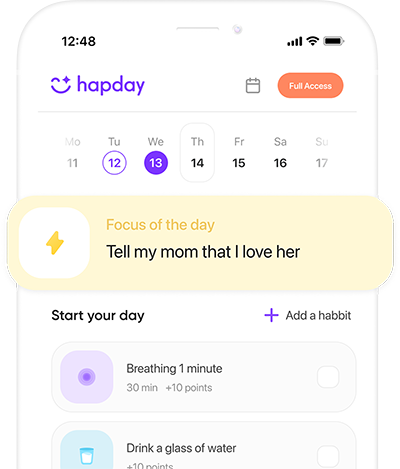
Living in our tech-savvy world, mental health apps now complement traditional therapies. Platforms like Hapday, with over 3 million users, support mental well-being with features like mood tracking and specialized healing programs.
Reconnecting with Yourself: Inner-Child Work
Inner-child work aims to mend unmet childhood needs. Dr. Peter Levine, founder of Somatic Experiencing, notes,
“The body remembers trauma.”
— Dr. Peter Levine, Somatic Experiencing Founder
Inner-child strategies work to align hidden memories with our adult selves, fostering healing across mind and body.
In moments of unrest, consider what your younger self lacked—was it love, safety, understanding? Visualization or dialogues can establish ties between your current and childhood selves, fostering a sense of peace.
Healing creates an internal sanctuary where your adult self navigates life with empowerment. It’s about integrating past and present memories into a unified life narrative.
Breaking Free: The Next Steps
Embarking on a journey of healing from childhood trauma is all about rediscovering yourself. It requires understanding and tools to reclaim your story and nurture resilience.
Creating your Support System
Healing starts with building a reliable support network of friends, family, and professionals who validate your experiences. Engage with communities—support groups, forums—the shared experiences bring comfort and understanding.
Adopting New Coping Mechanisms
It’s time to swap harmful coping for healthier alternatives. Regular exercise, creative pursuits, or structured routines bring stability. Experiment with approaches like art therapy or yoga until you find what fits your path.
Tracking Progress
Celebrate every victory—a panic-free day or asserting your needs. Tracking progress, maybe with a wellness app like Hapday, maps your healing journey. Hugging tips like habit tracking or breathing exercises, Hapday supports trauma recovery with evidence-based tools.
Empowering Future Growth
Journeying through childhood trauma isn’t easy. Healing isn’t a straightforward path, and setbacks aren’t failures. They’re brushstrokes on your resilient canvas.
Should the way ahead seem foggy today, remember, you’re equipped to find your course. Continual guidance makes a world of difference. Hapday provides evidence-backed coaching and supports you, with a therapeutic program that’s helped millions tread the path of healing and growth.
Key Takeaways
- Childhood trauma impacts many and recognizing it is crucial for healing.
- Understanding how trauma rewires the brain aids in reframing our narratives.
- Various tools, including therapy and mindfulness, can facilitate healing.
- Support systems and healthy coping mechanisms promote resilience and recovery.
- Importance of tracking progress in the healing journey to celebrate milestones.
The Bottom Line
Embarking on a journey of healing from childhood trauma is a brave endeavor. It requires commitment, understanding, and support, but is ultimately empowering. You possess the tools to reclaim your narrative and foster resilience amidst adversity.
References
- SAMHSA. Understanding Child Trauma – https://www.samhsa.gov/child-trauma
- Neurobiology of Stress. Journal http://academic.oup.com/nst/article/4/2018/45/3552349
- Journal of Traumatic Stress. https://onlinelibrary.wiley.com/journal/15736598
- Mindful.org. Effects of Mindfulness for PTSD – https://www.mindful.org/mindfulness-explained/
- National Center for Biotechnology Information. Trauma and the Mind – https://www.ncbi.nlm.nih.gov/
- The Book “Healing Developmental Trauma: How Early Trauma Affects Self-Regulation, Self-Image, and the Capacity for Relationship” published by Laurence Heller and Aline LaPierre