

Table of Contents
- Navigating the Complex Web of Guilt
- Step 1: Confront and Embrace Your Guilt
- Step 2: Dig Deep for the Cause
- Step 3: Battle the Illusions
- Step 4: Seek Redemption Through Action
- Step 5: Embrace Self-Kindness
- Step 6: Channel Guilt into Growth
- Step 7: Professional Guidance? Yes, Please
- Conclusion: Embrace the Journey
Key Takeaways
- Guilt can be a heavy burden but recognizing it is the first step to overcoming it.
- Understanding the roots of guilt helps in reframing it and making it manageable.
- Engaging in self-compassion and taking action can transform guilt into growth.
- Seeking professional help is a strength, not a weakness, when dealing with guilt.
We’ve all felt them—the heavy chains of guilt. They drag us down, wrapping tight around our hearts. It’s subtle at first, isn’t it? Maybe you forgot a friend’s birthday, didn’t show gratitude for a kind gesture, or failed to follow through on a promise. And before you realize, guilt sets in, like a fog clouding your heart and mind. But let’s pause for a moment. Freedom from this torment? It’s not just a distant dream but a real possibility. With intentionality and a good dose of self-awareness, breaking free from guilt is within reach. So, here we go—let’s start this liberating journey together.
Navigating the Complex Web of Guilt
Guilt—it’s a tangled mess, deeply embedded in our psyche. According to Dr. Sarah Chen, a clinical psychologist at NYU, guilt stems from a clash between our actions and the ideals we hold dear or those society thrusts upon us. Take Maya for example: a 28-year-old marketing executive who felt intense guilt post-divorce. Even though it was the healthiest decision for her, the nagging idea of failure hounded her. Society can be relentless, can’t it?
Back in 2021, a study highlighted how guilt, though necessary for moral behavior, turns against us when excessive—leading to mental struggles like depression (The Guardian reported this with a focus on mental health). From as young as two years old, guilt already weaves itself into our moral fabric, as the American Psychological Association once noted. Yet, not all of it is bad; it prompts us to correct mistakes, nudging us towards a moral compass when kept in check.
Step 1: Confront and Embrace Your Guilt
Acknowledgment is where it all starts. Don’t hide from it—guilt is real and unavoidable, like a candid photo showing every flaw. Face it head-on and without shame.
“It’s crucial to accept guilt as it is, stripped of any judgment.”
— Dr. Emily Hart, Psychotherapist
Think of yourself as an artist, with guilt merely one shade on your palette. Acknowledge this color, but don’t let it be the only one you paint with. Grab a journal, scribble away. It helps, truly, by turning your messy mindscape into something tangible and understandable.
Step 2: Dig Deep for the Cause
Now that you’ve faced it, it’s time to dig—get to the root of that guilt. Is it your own doing, or are external pressures to blame? Often, guilt isn’t just ours… It’s society’s whispers or a family’s legacy.
Look at Lauren. She quit a stable job for her passion—art. Despite loving her decision, guilt lingered, not from regret but society’s voice demanding security and success. This step is about seeing clearly, reframing your guilt, making it manageable.
Here, self-reflection is invaluable. Techniques like mindfulness can piece together your emotional puzzle, bringing clarity to a mind once clouded.
Step 3: Battle the Illusions
Ah, guilt—it’s like sparring with shadows. You often combat illusions, not facts. Distinguish what’s real from what’s not. “I must be perfect”—who decided this? CBT, or Cognitive Behavioral Therapy, can be your ally here. Assess those guilt-driven thoughts—where’s the evidence?
Like, “I always let people down,” really? Scrutinize it. Revisit instances where you didn’t. Sometimes a community, like the Hapday platform with its 3 million users, can guide you. Engage in evidence-based coaching, even in those restless nights.
Step 4: Seek Redemption Through Action
Guilt manifests not just in thought but in deeds and connections. Amends, wherever possible, work wonders. It’s about owning up, not just seeking forgiveness—righting the wrong for integrity’s sake.
Look at Daniel. A spat with his brother left him guilty, sure. But he chose action over rumination, reached out, dressed old wounds. This act lifted his burdens, proving amends work beyond seeking mere apologies.
Step 5: Embrace Self-Kindness
This step? It’s crucial. Show kindness to yourself. Treat yourself with the love you’d show a close friend—it’s a notion Dr. Kristin Neff champions. Imperfections are part of the human tapestry, after all.
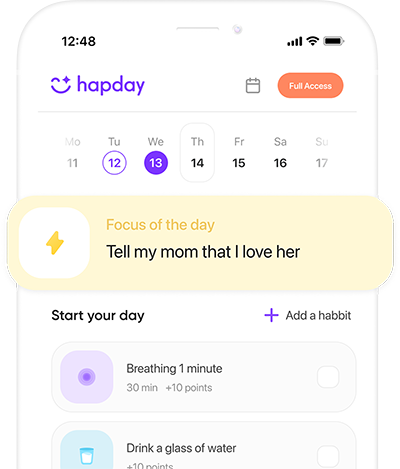
Tap into practices that center self-compassion, like affirmations or mindful exercises. Digital spaces like Hapday can offer tailored support, blending structure with empathy on your healing journey.
Step 6: Channel Guilt into Growth
Let it stagnate, and guilt festers, paralyzes. Better to channel it into something meaningful. Volunteer, pick up a creative project, grow. Transform guilt into a drive for action, not a cage of inaction.
When Maya shifted her divorce-induced guilt towards volunteering, she rediscovered purpose. Redirecting those energies did more than alleviate guilt—it ignited her community spirit.
Step 7: Professional Guidance? Yes, Please
If self-efforts falter, professional help isn’t a sign of giving in—it’s pure strength. A therapist weaves structured, evidence-backed support, personalizing your journey.
And sometimes, those instant helps like AI apps, Hapday for one, stand by with cost-effective alternatives, lending an ear anytime the world feels too much.
Conclusion: Embrace the Journey
Breaking the shackles of guilt—it’s not linear, simple, or quick. It’s a voyage of discovery and acceptance. Though it seems daunting, each stride forward leads to healing. Reclaim the narrative.
If support along the way feels needed, Hapday awaits (hapday.app). Offering around-the-clock AI coaching, it transforms guilt’s grasp into a tool for personal empowerment and rediscovery.
The Bottom Line
Breaking free from guilt is a process that involves understanding, acknowledgment, self-kindsness, and sometimes external support. With intentional effort and the right strategies, you can transform guilt into a powerful tool for growth and healing.
**References:**
- American Psychological Association – Source known but not linked directly.
- Mayo Clinic – Source known but not linked directly.