



At 2 a.m., the brain runs like a browser with too many tabs—Slack pings you missed, the roommate’s Venmo nudge, your manager’s “quick sync” that never is. The word you avoid—burnout—hangs in the air anyway. You’re not broken, and you’re not weak. You’re depleted. This is precisely where mental health coaching for burnout can meet you: in the space between “I’m not okay” and “What do I actually do next?” In my experience, we over-pathologize what’s often a solvable mismatch between demand and recovery.
Table of Contents
Key Takeaways
- Burnout is an occupational pattern of exhaustion, cynicism, and reduced efficacy—not a personal failure.
- Mental health coaching is a skills-based partnership that rebalances demand and recovery; it’s not psychotherapy or crisis care.
- Small, specific, and trackable changes—plus clear boundary scripts and micro-recovery—drive durable progress.
- Measure change across exhaustion, cynicism, and efficacy, and iterate using real-world data.
- Seek licensed clinical support for severe or persistent symptoms; ethical coaches will refer when needed.
Is it burnout—or just stress? A quick gut check
You probably know the tells: exhaustion that sleep doesn’t touch, a creeping cynicism, and the sense that your output never clears the bar. The World Health Organization, which added burnout to ICD-11 in 2019, frames it as an occupational syndrome with three parts—exhaustion, mental distance/cynicism, and reduced professional efficacy. Not a personal failure. A pattern with footprints.
“Burnout is a measurable state, not a vibe. When we see that triad—energy depletion, cynicism, and reduced effectiveness—we’re not just talking about a bad week. We’re talking about a system of demands outpacing a system of recovery.”
— Dr. Leah Park, PhD, Organizational Psychologist and Lecturer at Stanford University
Workload, control, social support, and fairness, she adds, are the levers that often tip the scale. I agree—semantics matter less than trajectory; if the pattern is sticking, it deserves attention.
The numbers tell a hard story. In 2022, nearly half of U.S. health workers reported feeling burned out often or very often (46%, up from 32% in 2018), per the CDC’s MMWR. Outside the hospital, the picture rhymes. Gallup’s 2023 State of the Global Workplace noted that 44% of workers felt stressed “a lot of the day,” a flat line from the pandemic spike. Mayo Clinic’s overview of job burnout echoes those core dimensions and warns of insomnia, substance misuse, and higher risk for depression if nothing changes. The trend line is clear—and, in my view, unacceptable.
What is mental health coaching for burnout?
Mental health coaching for burnout is a structured, skills-based partnership aimed at reducing exhaustion, restoring motivation, and returning a sense of control. Think of it as applied mental fitness for your work and your life. A coach doesn’t diagnose or treat mental health conditions. Rather, they help you translate evidence-based strategies—cognitive reframes, values clarification, behavior design, boundary language, sleep hygiene, and stress‑recovery micro‑doses—into your actual week.
“When Maya, 28, moved through a divorce and a reorg in the same quarter, she didn’t need a hundred platitudes. She needed a map: what to say to her manager, what to stop doing by Friday, and how to get her nervous system out of the red zone between 10 p.m. and midnight.”
— Andrea Willis, NBC-HWC, ICF-Certified Health and Wellness Coach
Over eight weeks, they aimed for small wins: guarding one no‑meeting block, using scripted boundary phrases, and pairing a 10‑minute nightly breath practice with a set lights‑out. The exhaustion didn’t vanish. It just stopped pulling her under. I’d argue that’s the kind of progress that lasts.
Why this works: the science underneath
Before the how, a quick why. Chronic stress tilts the body toward threat—heart rate up, deep sleep down, attention narrowed to the problem du jour. NIMH and Mayo Clinic have both outlined how uncontained stress disturbs sleep, mood, and immune function. Burnout compounds the loop.
- Cognitive load eases when you externalize thinking. Writing, planning, and scripting offload rumination so the brain stops “holding it all.” Cognitive behavioral principles—spotting thinking traps, reality‑testing them, and designing alternative behaviors—have a strong evidence base for improving mood and function (APA). In plain terms: get it on paper, then get specific.
- Physiological downshifts tell your nervous system it’s safe. Breath‑focused relaxation activates the parasympathetic response; Harvard Health has covered how slow, diaphragmatic breathing can calm the stress cascade and sharpen attention. I’ve seen clients change a day with four slow rounds.
- Behavior change sticks when it’s small, specific, and tracked. Health coaching methods—rooted in motivational interviewing and behavior design—are linked with better adherence to lifestyle shifts and improved well‑being (Harvard Health Publishing). If it’s too big, stressed brains balk. Tiny wins, then bigger ones.
How mental health coaching for burnout works: session flow and skills
A typical arc runs four to twelve weeks. The goal isn’t to “fix” you; it’s to recalibrate the ratio between workload and recovery—and build habits that don’t vanish when life surges again. I’m biased toward brevity that compounds.
- Assessment and anchors
Map your energy drains, recovery habits, and friction points. A coach may use brief self‑ratings of exhaustion, cynicism, and efficacy to set a baseline.
“Naming the pattern helps you stop blaming your personality. From there, coaching borrows from CBT—catching distorted thoughts like ‘I can’t say no or I’ll be fired’—and runs real‑life experiments to test them.”
— Dr. Amir Patel, Clinical Psychologist at NYU Langone
Evidence over fear.
- Micro‑recovery prescriptions
Pick two or three tiny interventions, like three breath cycles before each meeting, a five‑minute sunlight walk after lunch, or “screens down at 10:30 p.m.” Why tiny? Under stress, big change feels like a threat. Small shifts are metabolically cheaper—so they happen. - Boundary language and workload shaping
Scripts matter: “I have 10 hours available this week. Which of these should I prioritize?” or “I can deliver X by Friday or Y by Wednesday—what’s most important?” Rehearsing this language lowers social threat and makes it deployable at work. Clear beats clever.
- Tracking and troubleshooting
Review what worked, what didn’t, and why. Data—mood, sleep, steps, time on priority tasks—guides the next experiment. It’s less glamorous than inspiration, and far more effective.
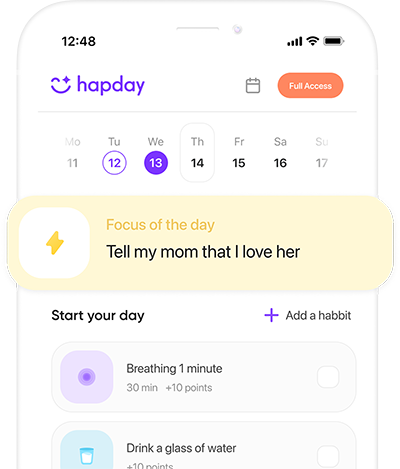
And yes, tools help. If your burnout flares at odd hours, platforms like Hapday can add a layer of practical support; its 24/7 live AI coaching sessions let you process a spiraling work thought in the moment rather then waiting a week. I’m a fan of anything that reduces the gap between insight and action—as long as it respects privacy and scope.
What mental health coaching for burnout is not
Coaching isn’t psychotherapy, medical care, or crisis support. It doesn’t diagnose, and it shouldn’t be used to treat severe depression, trauma, suicidal thoughts, or substance dependence. Ethical coaches screen for red flags and refer out when clinical care is warranted.
“Good coaches know their lane. If a client shows signs of major depressive disorder or panic that’s impairing daily life, the priority is a warm handoff to a licensed clinician.”
— Dr. Leah Park, PhD, Organizational Psychologist and Lecturer at Stanford University
If symptoms are severe or persistent—sleep is nearly absent, thoughts of self‑harm, daily functioning is slipping—contact your primary care provider or a mental health professional right away. Lines matter; safety more so.
Inside a week of mental health coaching for burnout: a real-world sketch
Let’s get concrete. Here’s how a fatigued-but-still-showing-up week can look.
- Monday: Energy triage
You and your coach list the week’s demands. You define “enough” for the top two tasks and set a STOP line for each day (for example, “stop at 6:30 p.m.”). Why it works: finishing cues reduce task creep and give your brain a clean “off” signal, which steadies sleep. The ritual is the boundary. - Tuesday: Nervous system downshift
You practice 4‑6 breathing (inhale four counts, exhale six) between meetings. Why it works: longer exhales activate parasympathetic pathways, dampening the stress response (Harvard Health). Two minutes can change a meeting—and sometimes a mood. - Wednesday: Cognitive unhooking
You catch a thought—“If I say no to that deck, I’ll look uncommitted”—and test it against reality. You ask your manager to prioritize. Why it works: CBT‑informed reframing trims threat appraisal, freeing working memory for problem‑solving (APA). Courage, rehearsed. - Thursday: Social support reframe
You write a two‑sentence update to a teammate asking for clarity: “I have 3 hours left today. Would you prefer I finish the client email sequence or debug the analytics script?” Why it works: assertive communication shifts demands into a shared decision rather than a private panic spiral. Most teams prefer clarity to guesswork. - Friday: Review and reward
You reflect on energy and output. Not doomscrolling after 11 p.m. improved next‑morning clarity by a lot. You plan the weekend around actual recovery, not revenge bedtime procrastination. The small reward—reading a chapter, a walk at dusk—cements the habit.
When the context is the problem
Coaching centers your agency without pretending context doesn’t count. Sometimes the most skillful move is structural: documenting an unsustainable workload, transferring teams, or leaving a toxic setup. A coach can help you pull the receipts, prep talking points, and weigh options. That’s not quitting. That’s health literacy applied to your life. My take: boundaries scale best when systems shift with them.
How mental health coaching for burnout helps different burnout profiles
Burnout doesn’t wear one face. Skills flex to fit the pattern you bring.
- Overcommitted high performer
You say yes, then pay later. Coaching zeros in on boundary scripts, decision rules (“two big rocks per day”), and perfectionism audits. Good enough beats perfect—and ships work. - Quiet quitter with a pulse
Cynicism is steering. Coaching leans into values—reconnecting tasks to why they matter—or helps you plan a thoughtful transition. Sometimes recommitment is honest. Sometimes exit is. - Care sandwicher
You shoulder paid work and unpaid caregiving. Coaching designs recovery within constraints: micro‑breaks, co‑care rituals, precise asks of your support system. Friction‑proofed, not idealized. - Remote multi‑tabber
Context‑switching leaks your energy. Coaching works on batching, notification cuts, and “doorway” rituals to enter and exit work modes. One tab, one task—on purpose.
Skills you’ll build in mental health coaching for burnout
- Energy budgeting with receipts
You’ll map where hours and energy actually go—and compare it to your priorities. Why it works: seeing the mismatch cues smarter allocation. Numbers beat hunches. - Boundary language that lands
You’ll practice concise, respectful phrases tailored to your culture. Why it works: rehearsed language lowers social threat and raises follow‑through. Scripts are care for future-you. - Sleep as a non‑negotiable
You’ll set screens‑off windows and light‑exposure routines. Why it works: consistent circadian cues improve sleep quality, supporting mood and executive function (NIMH). Sleep is the keystone, not a luxury. - Micro‑recovery rituals
You’ll install 30–90‑second resets: breath cycles, posture shifts, brief movement. Why it works: frequent small downshifts keep your nervous system from redlining. Recovery belongs inside the day, not only after it. - Thought hygiene
You’ll spot doom‑loops and “unhook” with labeling and reframes. Why it works: metacognitive awareness reduces rumination and opens space for action (APA). Name it, then move.
What to expect from a coach—and what to ask before you start
Coaches should be transparent about scope, methods, and how progress is tracked. Many draw from motivational interviewing, CBT‑informed skills, and behavior design. Ask for specifics; methods matter more than charisma.
- What frameworks guide your approach to mental health coaching for burnout?
- How will we measure change in exhaustion, cynicism, and efficacy?
- What happens if I hit a wall or need therapy instead?
- What does a typical session agenda look like?
“If a coach can’t describe their method, you’re not getting a method—you’re getting vibes. With burnout, vibes aren’t enough.”
— Andrea Willis, NBC-HWC, ICF-Certified Health and Wellness Coach
How to measure progress in mental health coaching for burnout
Progress might look like:
- Exhaustion: fewer afternoon crashes; steadier sleep
- Cynicism: less all‑or‑nothing thinking; more curiosity
- Efficacy: consistent progress on the few things that matter
Data helps. Track a weekly burnout snapshot (0–10 across the three dimensions), sleep duration and quality, and percentage of time spent on priority tasks. Imperfect data is still useful—trend lines over trophies.
What to do if your burnout spikes mid-process
Sometimes coaching uncovers bigger fissures—untreated anxiety, depression, trauma. If you notice persistent sadness, loss of interest, major sleep or appetite changes, or thoughts of self‑harm, pause coaching goals and connect with a licensed clinician. Ethical coaches will support referral and, when appropriate, collaborate on a stepped‑care plan once you’re stable. Safety is the strategy.
Why mental health coaching for burnout is especially useful for Gen Z and Millennial women
The pressures intersect: perform at work, perform at home; be “always on” digitally while carrying invisible household and emotional labor. Coaching meets that reality as it is.
“For women, especially early‑ and mid‑career, the ask isn’t just to work smarter. It’s to renegotiate norms—at work, in relationships, and with yourself—and then rehearse that courage in small, doable reps.”
— Dr. Amir Patel, Clinical Psychologist at NYU Langone
My view: that renegotiation is overdue—and deeply practical.
The upside: a better baseline, not just fewer fires
The aim isn’t only to put out the current flame. It’s to install a different fire code:
- Workflows that protect deep focus time
- Scripts that stop scope creep before it starts
- Recovery as a default, not a guilty pleasure
- A nervous system that knows how to return to calm
Even if the job stays demanding, you stop paying the chaos tax. That’s progress you can feel.
How to start—without overwhelming yourself
- Name your season
Write one sentence about the season you’re in: “I’m in a rebuild,” or “I’m in survival mode for eight weeks.” Naming normalizes constraints. It also guides choices. - Pick one lever per week
One boundary phrase, one breath practice, or one stop time. Track it. Celebrate it. Tiny is not trivial. - Share the plan with one person
Tell a friend, partner, or manager the single change you’re testing. Social proof nudges follow‑through. - Set a check‑in
Every Friday, ask: Did my week’s spend match my priorities? What’s one micro‑shift for next week? Course‑correct, don’t catastrophize.
When coaching meets culture
No volume of breathwork fixes systemic overload or inequity. Coaching can, however, help you gather evidence—workload, outcomes, health impact—so you can advocate effectively. That may mean proposing no‑meeting blocks, experimenting with async updates, or planning a transition with less collateral damage. If you stay, you’ll do it with clearer agreements. If you go, you’ll do it with a plan. Both are wins.
What it feels like when it starts to work
The tells are small at first. You stop rereading the same sentence. A Slack ping lands and you don’t flinch. You say, “I can deliver X or Y; what’s the priority?” and your chest stays quiet. You say, “Enough for today,” and you actually believe it. That’s not laziness. That’s healing—and, frankly, hard‑won.
If this sounds like a version of you you’d like to meet, mental health coaching for burnout can be your training plan.
The Bottom Line
You’re not powerless against burnout. With small, repeatable skills, clear boundary language, and honest measures of progress, you can rebuild energy and effectiveness. If you want steady support applying these tools in real time, consider Hapday for 24/7 AI coaching, mood, and habit tracking to help you turn insights into habits. Learn more at hapday.app.
References
- World Health Organization (WHO) – Burn-out an “occupational phenomenon”: ICD-11
- CDC MMWR – Trends in Health Worker Burnout, 2018–2022
- Mayo Clinic – Job burnout: How to spot it and take action
- American Psychological Association – Dictionary: Burnout
- NIMH – 5 Things You Should Know About Stress
- Harvard Health Publishing – Relaxation techniques: Breath control helps quell errant stress response
- Harvard Health Publishing – Health coaching might help you reach your wellness goals
- Gallup – State of the Global Workplace 2023
If you want steady support applying mental health coaching for burnout in real time, consider Hapday. It offers 24/7 AI coaching sessions plus mood and habit tracking to help you turn insights into habits. Ready to start? Try Hapday’s evidence-based coaching to practice the habits that protect your energy, day after day.