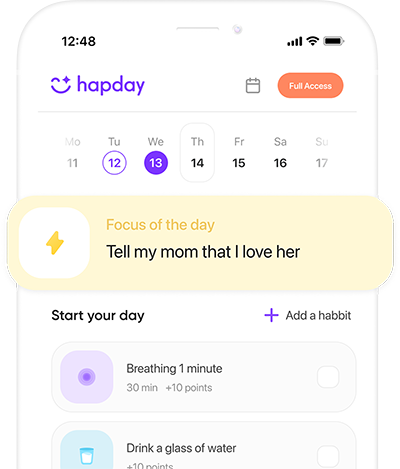




If you’re navigating intrusive thoughts and rituals, you may have heard of mental health coaching for OCD. Think of it as structured, skills-focused support that complements evidence-based treatment—not a replacement for therapy or medication. About 1.2% of U.S. adults experience OCD in a given year, and many struggle to translate therapy insights into daily life (NIMH, 2023). Coaching can help close that gap. And if we’re honest, turning intention into daily practice is where most of us stumble.
Table of Contents
- What Mental Health Coaching for OCD Is (and Isn’t)
- How Mental Health Coaching for OCD Works
- Coaching vs. Therapy vs. Medication
- Who Benefits Most—and Who Shouldn’t Use Coaching Alone
- A Month of Coaching: What It Can Look Like
- How to Find a Qualified Coach
- Safety, Access, and Equity
- Benefits of Mental Health Coaching for OCD
- Bottom line
- Summary
- Call to Action
- Suggested Image
- References
What Mental Health Coaching for OCD Is (and Isn’t)
Mental health coaching for OCD helps you turn science-backed strategies into routines you can practice between therapy sessions. Coaches educate, set goals, track progress, and keep you accountable. They do not diagnose, treat, or manage risk. A good coach collaborates with your therapist or psychiatrist when possible, using clear boundaries and safety plans. Done well, it’s pragmatic—closer to athletic training than talk therapy, and that’s a strength.
Where it fits:
- Psychoeducation about OCD and anxiety cycles
- Planning and tracking exposures you’ve designed in therapy
- Habit building around sleep, exercise, and mindfulness
- Skills for values-based living and time management
- Measurement-based progress check-ins (e.g., Y-BOCS/DOCS ratings)
Where it doesn’t fit:
- Acute crises, suicidality, or severe impairment needing clinical care
- Diagnosing OCD or prescribing medication
- Replacing exposure and response prevention with “feel-good” tips
Coaching without clear scope does more harm than good—soft reassurance in place of exposure isn’t kindness, it’s a stall.
How Mental Health Coaching for OCD Works
Evidence-based backbone: exposure and response prevention and CBT for OCD
- Exposure and response prevention (ERP) is the gold-standard behavioral treatment. Meta-analyses show large effects and meaningful symptom reductions for OCD across subtypes (IOCDF; Olatunji et al., 2013). If there’s one through-line since the 1990s, it’s this: ERP changes behavior, and behavior reshapes fear.
- CBT for OCD, which often includes ERP plus cognitive strategies, reliably reduces obsessions and compulsions with large effect sizes in controlled trials (Olatunji et al., 2013). That blend—thoughts plus actions—remains the backbone in clinics from Boston to Boise.
What coaching adds:
- Adherence support: Human guidance increases engagement and outcomes in digital CBT programs versus self-help alone (Baumeister et al., 2014; Karyotaki et al., 2021). A small dose of accountability, even via text check-ins, often doubles the follow-through. That’s my read after years of watching programs rise or fade.
- Implementation tactics: “If-then” planning (implementation intentions) produces medium-to-large improvements in goal follow-through (Sheeran, 2002). Coaches help you craft and practice these micro-plans for exposures and ritual prevention—tiny guardrails when motivation wobbles.
- Data-driven tweaks: Brief weekly measures (e.g., Y-BOCS or DOCS subscales) guide exposure difficulty, time spent in uncertainty, and response-prevention targets. Numbers don’t tell the whole story, but they stop the story from drifting.
Back in 2020–2021, as digital mental health ballooned, Harvard-affiliated clinicians repeatedly emphasized one theme in grand rounds: the practice between sessions decides the arc of recovery. Coaching lives there.
Coaching vs. Therapy vs. Medication
- ERP/CBT for OCD: First-line treatments. Many studies show 50–60% average symptom reduction, with sustained gains after treatment when ERP is completed as designed (IOCDF; Olatunji et al., 2013). If forced to choose a single intervention for most people, ERP is still the workhorse.
- Medication: SSRIs/SRIs help many with OCD; systematic reviews show clinical benefits over placebo, with response rates typically around 40–60% and average reductions on symptom scales that are meaningful but often smaller than ERP (Soomro et al., 2008). When obsessions roar, meds can lower the volume enough to do the hard work.
- Mental health coaching for OCD: Best seen as a bridge that improves practice, consistency, and lifestyle supports around ERP and CBT for OCD. It can also help you coordinate care, advocate for ERP with providers, and keep momentum when motivation dips. Coaching, in other words, is the scaffolding—not the building itself.
Who Benefits Most—and Who Shouldn’t Use Coaching Alone
Likely to benefit:
- You have a diagnosis of OCD or strong suspicion, are medically stable, and want help practicing ERP homework and habits.
- You’re using guided self-help or iCBT and want accountability and troubleshooting.
- You’ve completed therapy and want relapse-prevention structure.
Needs clinical care first:
- Active suicidality, self-harm, severe depression, or substance misuse
- Untreated psychosis, mania, or severe eating disorder
- Extreme functional impairment where exposure design needs a clinician
A rule of thumb that’s served me well: if safety is in question or daily functioning is cratering, clinical care must lead and coaching waits its turn.
A Month of Coaching: What It Can Look Like
Week 1
- Clarify values and goals; map obsessions/compulsions.
- Baseline measures (e.g., Y-BOCS or DOCS).
- Build a starter ERP plan aligned with therapy or reputable protocols.
A modest start beats a perfect plan that never launches—every time.
Week 2
- Two to three graded ERP tasks with response prevention.
- If-then plans for triggers (e.g., “If I get a contamination spike, then I’ll delay washing for 10 minutes and do paced breathing.”)
- Sleep, movement, and caffeine goals to steady anxiety physiology.
You’ll notice the body piece matters; sleep debt is like lighter fluid on intrusive thoughts.
Week 3
- Increase exposure difficulty by ~10–20% based on data and tolerance.
- Add attention-training or mindfulness-of-intrusions to reduce fusion with thoughts.
- Review wins; troubleshoot avoidance.
Expect a wobble here. That’s not failure—it’s your nervous system learning.
Week 4
- Consolidate rituals blocked; plan for setbacks and lapses.
- Reassess symptom scales; update hierarchy.
- Create a sustainable self-maintenance routine.
A boring, repeatable plan beats a heroic sprint. Every clinician I trust says the same.
How to Find a Qualified Coach
- Training and scope: Look for coaches who can articulate ERP and CBT for OCD principles, name their training pathways, and explain scope limits (no diagnosis, no crisis care).
- Collaboration: Willing to coordinate with your ERP therapist or psychiatrist.
- Structure: Uses written exposure hierarchies, weekly metrics, and relapse-prevention plans.
- Transparency: Clear fees, session length, messaging policies, and crisis resources.
- Red flags: Promises to “cure OCD fast,” avoids discomfort, relies on reassurance, or discourages ERP/medication.
One practical test: ask them to walk you through how they’d structure the first two weeks. If the answer is vague, keep looking.
Safety, Access, and Equity
- Informed consent and crisis planning are non-negotiable.
- Telecoaching can expand access and support between sessions. Guided internet-based CBT—often with non-therapist support—shows strong outcomes for anxiety and OCD (Wootton, 2016; Karyotaki et al., 2021).
- If cost is a barrier, ask about group coaching, sliding scales, or brief packages focused on adherence.
Waitlists for ERP spiked after 2020; major outlets, including The Guardian, reported rising demand and patchy access in 2022. Equity isn’t a side note here—it’s the test of whether models like coaching actually move the needle.
Benefits of Mental Health Coaching for OCD
- More consistent ERP homework and fewer “skipped” exposures
- Faster feedback loops with weekly data
- Practical skills for sleep, stress, and time that buffer anxiety sensitivity
- A compassionate accountability partner who gets the struggle—and your goals
At its best, coaching makes courage ordinary. That’s no small thing.
Bottom line
Mental health coaching for OCD transforms insight into action. When paired with ERP and CBT for OCD—and medication when needed—it can improve adherence, confidence, and day-to-day functioning. If you’re ready to practice brave steps between sessions, coaching can help you build the muscle to live by your values, not your rituals. Small steps, repeated, still change a brain. Why wouldn’t we use every proven lever we have?
Summary
Mental health coaching for OCD is structured, skills-based support that complements ERP and CBT for OCD, not a replacement. Evidence shows ERP and guided programs work best; coaching boosts adherence with implementation plans, data tracking, and accountability. Choose trained coaches who collaborate with clinicians and work within scope. Small, brave steps—repeated—change the brain.
Call to Action
CTA: Ready to add coaching to your OCD toolkit? Book a free clarity call to map your first two weeks of ERP practice and supports.
Suggested Image
Suggested image: A minimalist checklist and phone timer beside a tea mug, signaling calm structure.
Alt text: Mental Health Coaching for OCD habit checklist and timer on desk
References
- National Institute of Mental Health (2023). Obsessive-Compulsive Disorder statistics. https://www.nimh.nih.gov/health/statistics/obsessive-compulsive-disorder-ocd
- International OCD Foundation. ERP is the gold-standard treatment for OCD. https://iocdf.org/about-ocd/ocd-treatment/
- Olatunji, B. O., et al. (2013). Cognitive-behavioral therapy for OCD: A meta-analysis. Clinical Psychology Review, 33(8), 1013–1026. https://doi.org/10.1016/j.cpr.2013.08.003
- Soomro, G. M., et al. (2008). Selective serotonin re-uptake inhibitors for OCD. Cochrane Database Syst Rev, (1):CD001765. https://doi.org/10.1002/14651858.CD001765.pub3
- Baumeister, H., et al. (2014). Impact of guidance on internet-based interventions. PLoS ONE, 9(6): e96230. https://journals.plos.org/plosone/article?id=10.1371/journal.pone.0096284
- Sheeran, P. (2002). Implementation intentions and goal achievement: A meta-analysis. Psychological Bulletin, 128(1), 87–120. https://doi.org/10.1037/0033-2909.128.1.87
- Wootton, B. M. (2016). Remote CBT for OCD: A systematic review and meta-analysis. Journal of Obsessive-Compulsive and Related Disorders, 9, 24–35. https://www.ncbi.nlm.nih.gov/pmc/articles/PMC5061143/